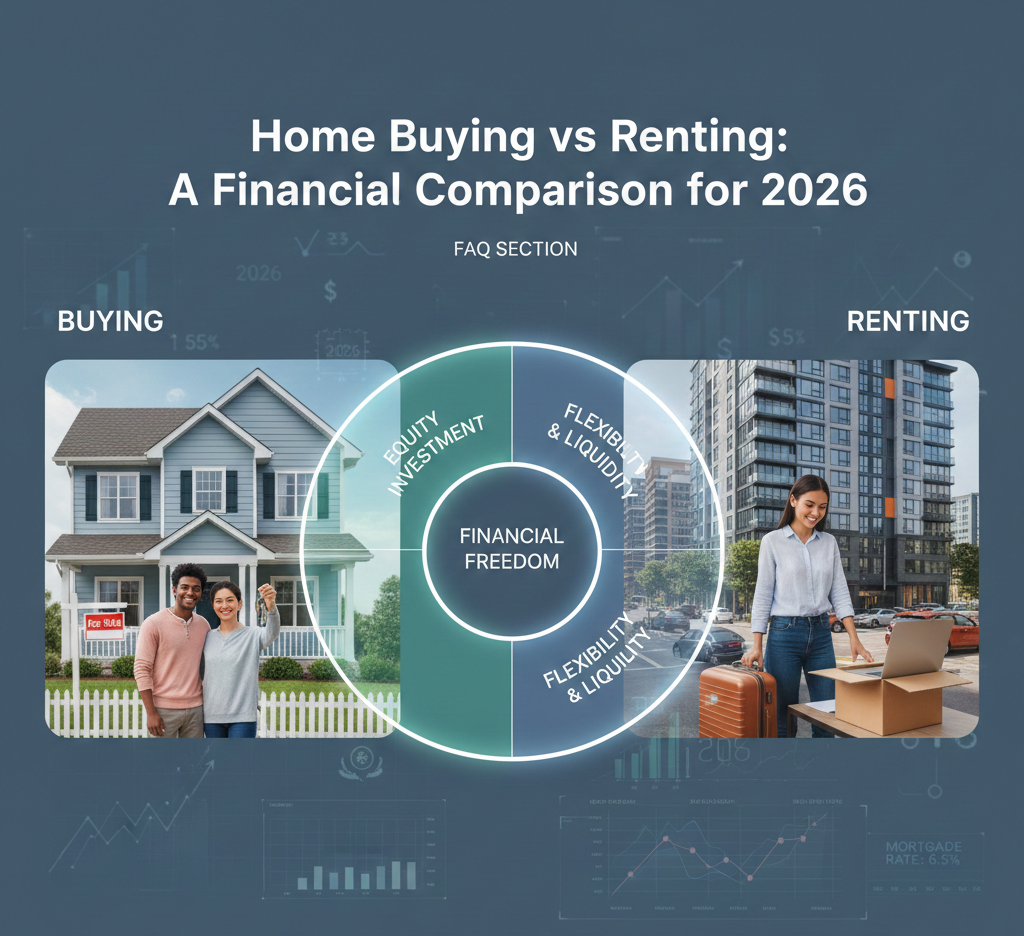
The age-old dilemma of whether to home buying or continue renting remains a top financial question for many. As we navigate 2026, the economic landscape continues to shift, making this decision even more nuanced. Let’s dive into a financial comparison to help you determine the best path for your circumstances.
The Case for Home Buying in 2026
Buying a home has long been considered a cornerstone of wealth building. In 2026, several factors continue to support this view:
- Potential for Appreciation: While real estate markets can fluctuate, historically, property values tend to appreciate over the long term. This means your home could be worth more in the future than what you paid for it, building equity over time.
- Building Equity: Every mortgage payment you make contributes to paying down your principal, increasing your ownership stake in the property. This equity can be a valuable asset, accessible through refinancing or when you sell.
- Fixed Housing Costs (with a Fixed-Rate Mortgage): Opting for a fixed-rate mortgage can lock in your monthly principal and interest payments for the life of the loan, providing predictability that renting often lacks. While property taxes and insurance can increase, the largest component of your housing cost remains stable.
- Tax Benefits: Homeowners may be eligible for various tax deductions, such as mortgage interest deduction and property tax deductions, which can reduce your overall taxable income. (Consult a tax professional for personalized advice).
- Freedom and Customization: Owning your home gives you the freedom to renovate, decorate, and customize your living space without needing landlord approval.
- Sense of Stability and Community: For many, homeownership provides a greater sense of stability, belonging, and investment in their local community.
However, buying also comes with significant responsibilities and upfront costs.
The Case for Renting in 2026
Renting offers flexibility and fewer responsibilities, making it an attractive option for many, especially in the current climate:
- Flexibility and Mobility: Renting allows you to move more easily for job opportunities, lifestyle changes, or simply to experience different neighborhoods. You’re not tied down by a mortgage or the process of selling a home.
- Lower Upfront Costs: Typically, renting only requires a security deposit and the first month’s rent, a significantly lower barrier to entry compared to a down payment, closing costs, and other buying expenses.
- No Maintenance Responsibilities: Landlords are generally responsible for repairs, maintenance, and property taxes, freeing you from these often-unpredictable expenses and time commitments.
- Predictable Monthly Expenses: Your rent payment is usually fixed for the duration of your lease, making budgeting straightforward. You don’t have to worry about sudden repair costs or fluctuating property taxes.
- Access to Amenities: Many rental properties, especially apartments and condos, offer amenities like gyms, pools, and communal spaces that might be expensive or impractical to have in a privately owned home.
- Opportunity Cost of Down Payment: The money you would have used for a down payment could instead be invested in other assets that may offer a higher return, depending on market conditions.
Financial Comparison: Key Factors to Consider
To make an informed decision in 2026, consider these financial aspects:
- Upfront Costs:
- Buying: Down payment (can range from 3.5% to 20% or more), closing costs (2-5% of the loan amount), home inspection, appraisal fees, and potential immediate repair costs.
- Renting: Security deposit (usually one to two months’ rent), first month’s rent, and sometimes application fees.
- Monthly Costs:
- Buying: Mortgage principal and interest, property taxes, homeowner’s insurance, private mortgage insurance (PMI) if your down payment is less than 20%, homeowner’s association (HOA) fees (if applicable), and maintenance/repair budget.
- Renting: Monthly rent, renter’s insurance (highly recommended but optional), and utilities.
- Long-Term Financial Implications:
- Buying: Potential for equity growth and appreciation, forced savings through mortgage principal payments, potential tax benefits, and protection against rising rent.
- Renting: No equity building, but greater liquidity and investment flexibility. You may be exposed to rent increases at lease renewal.
- Market Conditions in 2026:
- Interest Rates: Keep an eye on mortgage interest rates. Higher rates increase monthly mortgage payments, impacting affordability.
- Home Prices: Local real estate market trends are crucial. Are prices rising, falling, or stable?
- Rental Market: How competitive is the rental market in your desired area? Are rents increasing significantly?
Making Your Decision Home Buying
The “right” choice isn’t universal. It depends on your personal financial situation, lifestyle, and long-term goals.
- Consider buying if: You have a stable income, a good credit score, savings for a down payment and closing costs, plan to stay in one location for at least 5-7 years (to offset transaction costs), and are comfortable with homeownership responsibilities.
- Consider renting if: You prioritize flexibility, have less savings, prefer not to deal with maintenance, are unsure of your long-term location, or believe you can earn a higher return by investing your down payment funds elsewhere.
It’s highly recommended to use a rent vs. buy calculator, available online, to input your specific numbers and get a personalized financial comparison. Additionally, consult with a financial advisor to discuss your individual circumstances.
FAQ Section
Q1: Is it generally better to buy or rent in a high-interest rate environment like 2026?
A high-interest rate environment can make buying more expensive due to higher monthly mortgage payments. However, if home prices are stable or declining, it might present an opportunity for long-term buyers if rates are expected to drop in the future (allowing for refinancing). Renting offers more flexibility in such an environment, as you’re not locked into a high rate. The “better” option depends on your individual financial resilience and market outlook.
Q2: How much should I save for a down payment when buying a home?
While a 20% down payment is often recommended to avoid Private Mortgage Insurance (PMI), it’s not always necessary. FHA loans allow for down payments as low as 3.5%, and some conventional loans offer options with 5% or 10% down. However, a larger down payment generally results in lower monthly payments and less interest paid over the life of the loan.
Q3: What hidden costs should I be aware of when buying a home?
Beyond the down payment and mortgage, anticipate closing costs (loan origination fees, appraisal fees, title insurance, legal fees), property taxes, homeowner’s insurance, potential HOA fees, and an emergency fund for unexpected repairs and maintenance.
Q4: Can renting help me save money for a down payment faster?
Potentially, yes. If your rent is significantly lower than what a mortgage payment (plus associated costs) would be, and you diligently save the difference, you could build a down payment fund more quickly. Renting also avoids the immediate upfront costs associated with buying.
Q5: How long should I plan to stay in a home if I buy it to make it financially worthwhile? A common rule of thumb is to plan on staying in a home for at least 5-7 years. This timeframe generally allows you to recoup the upfront costs of buying and selling (like closing costs and real estate commissions) and to build enough equity to make the investment worthwhile. Moving sooner might mean losing money due to these transaction costs.
Q6: What are the tax benefits of homeownership in 2026?
Homeowners may be able to deduct mortgage interest and property taxes on their federal income tax returns, potentially reducing their taxable income. The specific deductions and limits can vary, so it’s essential to consult with a qualified tax professional for personalized advice relevant to current tax laws.
Q7: Is it possible to build wealth while renting?
Absolutely! While renting doesn’t build equity in a property, the money saved on a down payment, closing costs, and maintenance can be invested elsewhere, such as in stocks, bonds, or retirement accounts. Consistent and strategic investing while renting can be a powerful way to build wealth. The key is to actively invest the difference.


Leave a Comment