

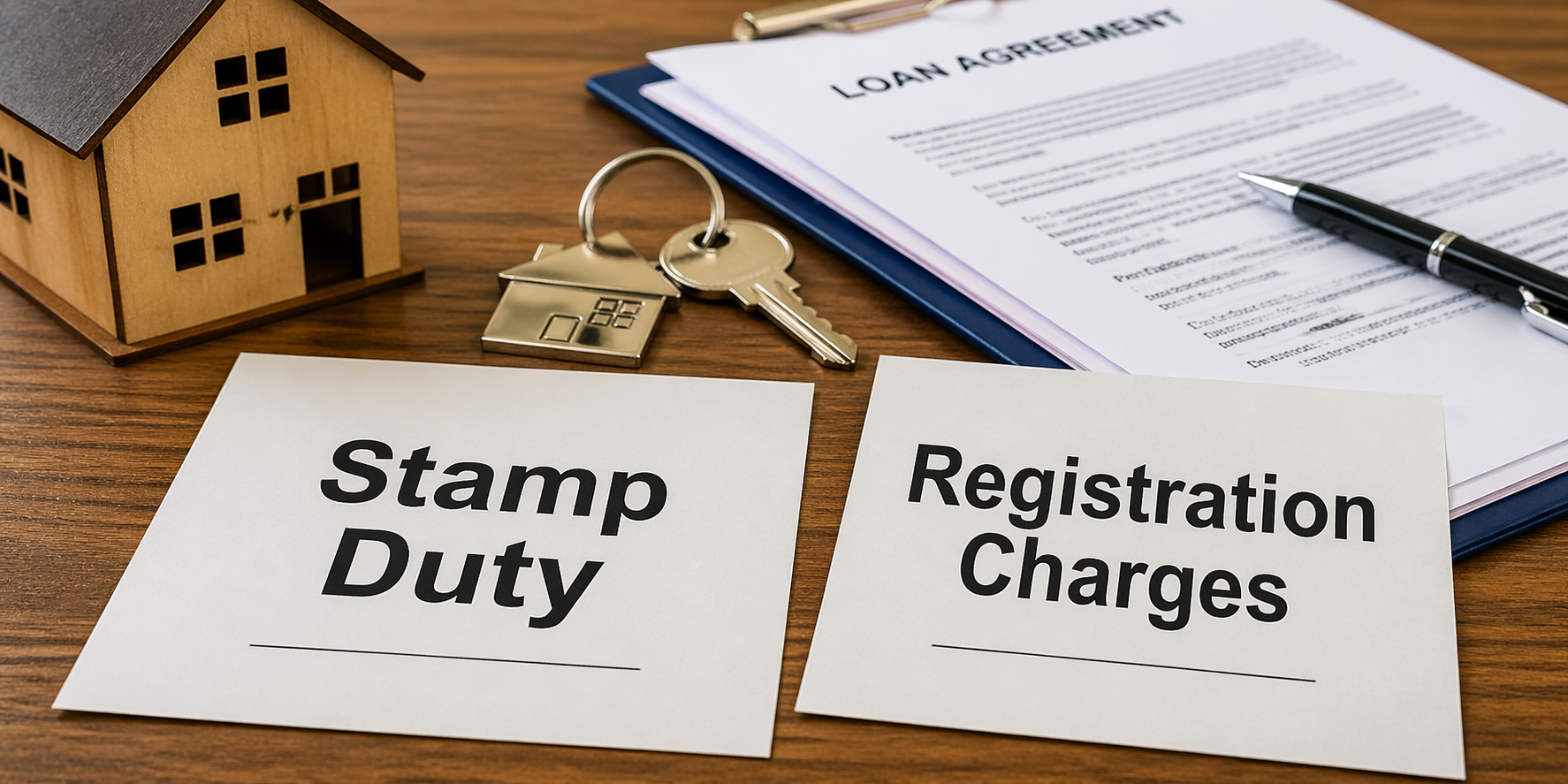
Buying a home is exciting. However, the property price is not the only cost you pay. In fact, two extra charges catch many buyers off guard — stamp duty and registration charges. So let’s understand both, simply and clearly.
What Is Stamp Duty?
Stamp duty is a tax paid to the state government. It is charged when you buy a property. Think of it as the government’s fee for making your ownership legal and official.
Without paying stamp duty, your property documents are not valid in court. Therefore, it is not optional. Every buyer must pay it.
How Much Is Stamp Duty?
The rate varies from state to state. However, as a general guide:
- Most states charge 5% to 7% of the property value
- Women buyers often get a 1% to 2% discount in many states
- Rural properties may attract a lower rate than urban ones
For example, if your home costs ₹50 lakhs and the stamp duty rate is 6%, you pay ₹3 lakhs as stamp duty alone. So always factor this into your budget early.
What Are Registration Charges?
Registration charges are separate from stamp duty. Additionally, they are paid to register the property in your name at the local sub-registrar’s office. This step makes you the legal owner on record.
How Much Are Registration Charges?
Typically, registration charges are 1% of the property value. Moreover, some states cap this amount at a fixed fee. So it is worth checking your state’s rules before you plan your budget.
Who Pays These Charges?
In almost all cases, the buyer pays both stamp duty and registration charges. Furthermore, these must be paid before or at the time of property registration. The seller is generally not responsible for these costs.
Are These Included in Your Home Loan?
This is a question many first-time buyers ask. Unfortunately, most banks and home finance companies do not include stamp duty in the home loan amount. As a result, you need to arrange this money separately.
However, some lenders do offer to cover a part of these charges. Therefore, it is always worth asking your housing finance partner before you finalise the loan.
How to Pay Stamp Duty
The process is straightforward. Here is how it works:
- Online — Most states allow payment through their government portal
- Franking — Done at authorised banks or franking centres
- e-Stamp paper — Available online in several states
Furthermore, always keep your payment receipt safe. You will need it at the time of registration.
Tips to Reduce Your Stamp Duty Burden
Stamp duty can be a large sum. However, there are a few smart ways to reduce it legally:
- Register in a woman’s name — Many states offer lower rates for women buyers. As a result, a joint loan with your spouse can help you save.
- Buy a ready-to-move home — Under-construction properties may attract GST on top of stamp duty. So ready homes can sometimes work out cheaper.
- Check your state’s schemes — Some states offer temporary reductions or waivers. Therefore, check before you register.
A Quick Summary
| Stamp Duty | Registration Charges | |
| What is it? | Tax on property purchase | Fee to register ownership |
| Who pays? | Buyer | Buyer |
| Typical rate | 5%–7% of property value | ~1% of property value |
| Included in home loan? | Usually no | Usually no |
Plan Before You Buy
Stamp duty and registration charges together can add up to 6% to 8% of your property value. For a ₹50 lakh home, that is ₹3 to ₹4 lakhs extra. So plan for this cost well in advance.
EMI calculator can be used to estimate your monthly payments. Then set aside funds separately for these charges. Above all, talk to your home loan finance company early. A good housing finance partner will help you plan the full cost — not just the loan amount.
Ready to apply for a home loan? Start with easy home finance options online today and get one step closer to your dream home.
Explore More Home Loan Resources
Knowledge Hub
Read more guides on home loans, mortgage loans, and property financing.
https://easyhomefinance.in/knowledge-hub/
Apply for a Home Loan Online
Start your home loan application easily.
https://easyhomefinance.in/
Home Loan EMI Calculator
Estimate your monthly repayment before applying for a home loan.
https://easyhomefinance.in/emi-calculator/
Home Loan Solutions
Explore housing finance options designed for first-time buyers and self-employed borrowers.
https://easyhomefinance.in/home-loans/





Leave a Comment