

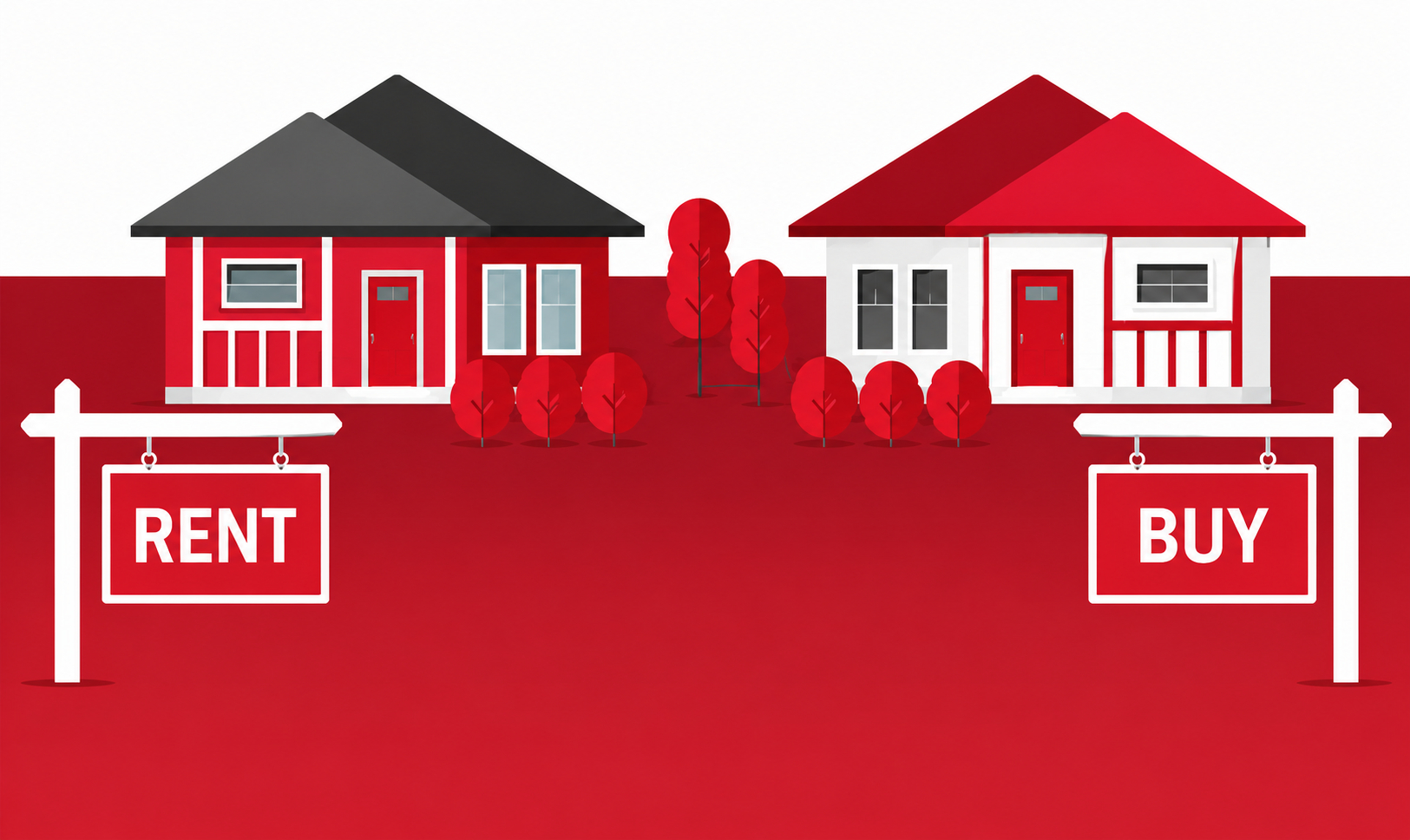
The debate around renting vs buying a home in India is as old as the real estate market itself. But in 2026, with interest rates stabilising, housing prices rising in tier-2 cities, and new government housing schemes in play, this question deserves a fresh, honest look.
Are you a first-time home buyer in India wondering whether to take the plunge? Or are you a long-term renter trying to figure out if buying vs renting a home actually makes financial sense for your situation? You are not alone. Millions of Indians ask this same question every year.
This guide will walk you through both sides — without bias — so you can make the right decision for your family and your finances. And if you do decide to buy, Easy Home Finance is here to make that journey simple, digital, and fast.
Quick Answer
There is no one-size-fits-all answer. Buying is better if you plan to stay for 5+ years and have a stable income. Renting makes more sense if you need flexibility or are not yet financially ready. Read on to understand why.
Difference Between Renting and Owning a Home
Before we get into numbers, let us understand what renting vs owning a home actually means in practice — beyond just who pays the landlord.
When you rent, you pay a monthly amount to live in someone else’s property. You get flexibility. You can move cities, change jobs, and upgrade your lifestyle without being tied down. But at the end of the day, the property is not yours — and neither is the equity you are building.
When you buy, you are investing in an asset. Every EMI you pay is building ownership. The home appreciates over time. You can renovate it, pass it on to your children, and use it as a financial security net in the future.
In India, owning a home also carries deep emotional value. It is a symbol of stability, security, and success — especially in a culture where homeownership is tied to family legacy.
Is It Better to Rent or Buy a Home in India? Key Factors to Consider
The answer to ‘is it better to rent or buy a home depends entirely on your personal situation. Here are the key factors you must consider:
1. How Long Will You Stay?
If you plan to live in the same city for at least 5 years, buying almost always makes more financial sense. In the first few years, EMI payments are heavy on interest. Over time, the principal repayment increases and the property’s market value also goes up — making ownership a strong long-term investment.
If your job requires frequent relocation or you are unsure about the city, renting gives you the freedom to move without the burden of selling a property.
2. Your Current Financial Health
Buying a home requires a down payment (typically 10–20% of the property value), legal fees, registration charges, and stamp duty. If you do not have that corpus ready, renting while you save is the smarter approach.
Easy Home Finance offers home loans starting at 8.99% per annum, with loans up to ₹75 lakhs — making it easier than ever for middle-income families to step into homeownership.
3. EMI vs Rent: What Are You Actually Paying?
In many Indian cities — especially tier-2 and tier-3 towns — the monthly EMI for a modest home is often comparable to, or only slightly higher than, the monthly rent for a similar property. The difference? Your EMI is building an asset. Your rent is not.
| Factor | Renting | Buying |
|---|---|---|
| Monthly outflow | Rent (no asset building) | EMI (builds ownership) |
| Flexibility | High – move anytime | Low – long-term commitment |
| Tax benefits | No | Yes (Section 24, 80C) |
| Asset creation | None | Strong over 5–10 years |
| Maintenance | Landlord’s responsibility | Owner’s responsibility |
| Security | Landlord can ask you to vacate | Full ownership security |
| Emotional value | Low | High |
Advantages of Buying a Home in India
Let us be clear about the advantages of buying a home — especially in the Indian context:
You Build Wealth Over Time
Indian real estate has historically appreciated at 6–8% annually in most urban and semi-urban areas. A home you buy today for ₹40 lakhs could be worth ₹70–80 lakhs in 10 years. This is one of the strongest advantages of buying a home over renting.
Tax Benefits That Renters Miss Out On
Home buyers enjoy significant income tax advantages:
- Deduction up to ₹2 lakh per year on home loan interest under Section 24(b)
- Principal repayment deduction up to ₹1.5 lakh under Section 80C
- Additional ₹50,000 deduction under Section 80EEA for first-time buyers (subject to eligibility)
These tax savings can substantially reduce the effective cost of your home loan EMI.
No Rent Hikes or Eviction Worries
One of the biggest frustrations of renting in India is the annual rent hike — usually 5–10% — and the risk of a landlord asking you to vacate with short notice. When you own your home, you are in full control. This is a key aspect of renting vs owning a home that many people do not factor in until they have experienced it.
PMAY 2.0 — Government Support for Buyers
If you are a first-time home buyer in India, you may be eligible for the Pradhan Mantri Awas Yojana Urban 2.0 (PMAY-U 2.0) scheme — the updated and expanded version of the earlier PMAY programme. Launched effective September 1, 2024, PMAY-U 2.0 aims to fulfil the “Housing for All” vision by providing financial assistance to 1 crore urban poor and middle-class families over the next five years.
Under the scheme’s Interest Subsidy Scheme (ISS), eligible first-time buyers can receive a home loan interest subsidy of up to ₹1.80 lakhs, with the subsidy credited directly to their loan account. Families belonging to EWS (annual income up to ₹3 lakh), LIG (up to ₹6 lakh), and MIG (up to ₹9 lakh) segments who do not own a pucca house anywhere in the country are eligible.
Easy Home Finance is an approved lender under PMAY-U 2.0, making it easier for you to avail this benefit seamlessly.
Customise Your Space
Owning your home means you can renovate, redesign, and personalise every inch of it. Whether it is a modular kitchen, a home office, or a play area for the kids — it is your call. No landlord permissions needed.
Benefits of Renting a Home
We believe in giving you the full picture. The benefits of renting a home are real — and in certain life situations, renting is genuinely the better choice.
- Flexibility: If you move cities or change jobs often, renting lets you upsize, downsize, or relocate without financial stress.
- Lower initial cost: No down payment, registration, or stamp duty. Just a security deposit, and you are in.
- Maintenance-free living: Repairs, leaks, and structural issues are typically the landlord’s problem.
- Try before you buy: Renting in a new neighbourhood lets you understand the area, commute, and community before committing to a purchase.
- Invest your capital elsewhere: If you have the down payment money in hand, you may prefer to invest it in equities or mutual funds while renting — though this requires financial discipline.
Should I Rent or Buy a House? The 5-Year Rule
Here is a simple framework used by financial planners across India: the 5-Year Rule.
If you plan to stay in the same city for 5 or more years, buying almost always wins. Property appreciation, tax benefits, and equity building comfortably outweigh the costs of buying.
If you are likely to move in less than 3 years, renting is safer. Selling a home quickly often means selling at a loss after transaction costs.
If you are between 3 and 5 years, it depends on the property price, your loan interest rate, and the local rental yields.Easy Home Finance Pro Tip – Use our free EMI calculator at easyhomefinance.in to see your exact monthly outflow — and our eligibility calculator to check how much loan you can get in under 60 seconds.
First-Time Home Buyer in India? Here’s What You Need to Know
If you are the first time home buyer, welcome to one of the most important financial decisions of your life. Here is a quick checklist:
- Check your credit score — aim for 700 or above for the best interest rates.
- Calculate your affordability — your EMI should not exceed 40–45% of your net monthly income.
- Understand PMAY eligibility — you may qualify for a subsidy of up to ₹2.67 lakhs.
- Choose a reputed lender — look for transparency, quick approvals, and digital ease. Easy Home Finance offers approval in 2 hours and disbursal in 24 hours.
- Account for all costs — not just the home loan, but registration, stamp duty, interior, and moving costs.
Renting vs Buying: The Final Verdict for Indian Families in 2026
So, what is the answer to the big question — is renting vs buying a house the right call for you?
If you have a stable income, plan to stay in one city for 5+ years, and are ready to make a down payment — buying is almost certainly the better long-term decision. You build an asset, save on taxes, and gain complete ownership security.
If you are in flux — new job, new city, tight on savings — renting is a responsible, sensible choice for now. But keep saving towards that down payment, because the sooner you buy, the more you benefit.
The good news? When you are ready, Easy Home Finance makes buying your first home as simple as it should be. India’s first AI-native housing finance company offers fast approvals, fully digital applications, and home loans that fit your real life — not just your paperwork.
Ready to Make the Move?
Apply online with us and get approved loan in 2 hours, disbursement in 24 hours. No branch visit, no paperwork pile. Just keys.
Frequently Asked Questions
Is it better to rent or buy a home in India in 2026?
Buying is better if you plan to stay for 5+ years and have a stable income. Renting is smarter if you need flexibility or are still saving for a down payment.
What are the main advantages of buying a home over renting?
Building equity, tax benefits under Section 24 and 80C, no eviction risk, property appreciation, and the freedom to customise your space.
What is the cost of buying a home vs renting in India?
Buying involves a down payment (10–20%), stamp duty, registration, and EMIs. Renting only needs a security deposit and monthly rent — but builds no asset.
Can a first-time home buyer in India get a subsidy?
Yes. Under PMAY, eligible first-time buyers can receive an interest subsidy of up to ₹2.67 lakhs on their home loan. Easy Home Finance is a PMAY-approved lender.
How much home loan can I get in India?
Easy Home Finance offers home loans up to ₹75 lakhs at interest rates starting from 8.99% per annum, with approvals in as little as 2 hours.





Leave a Comment